
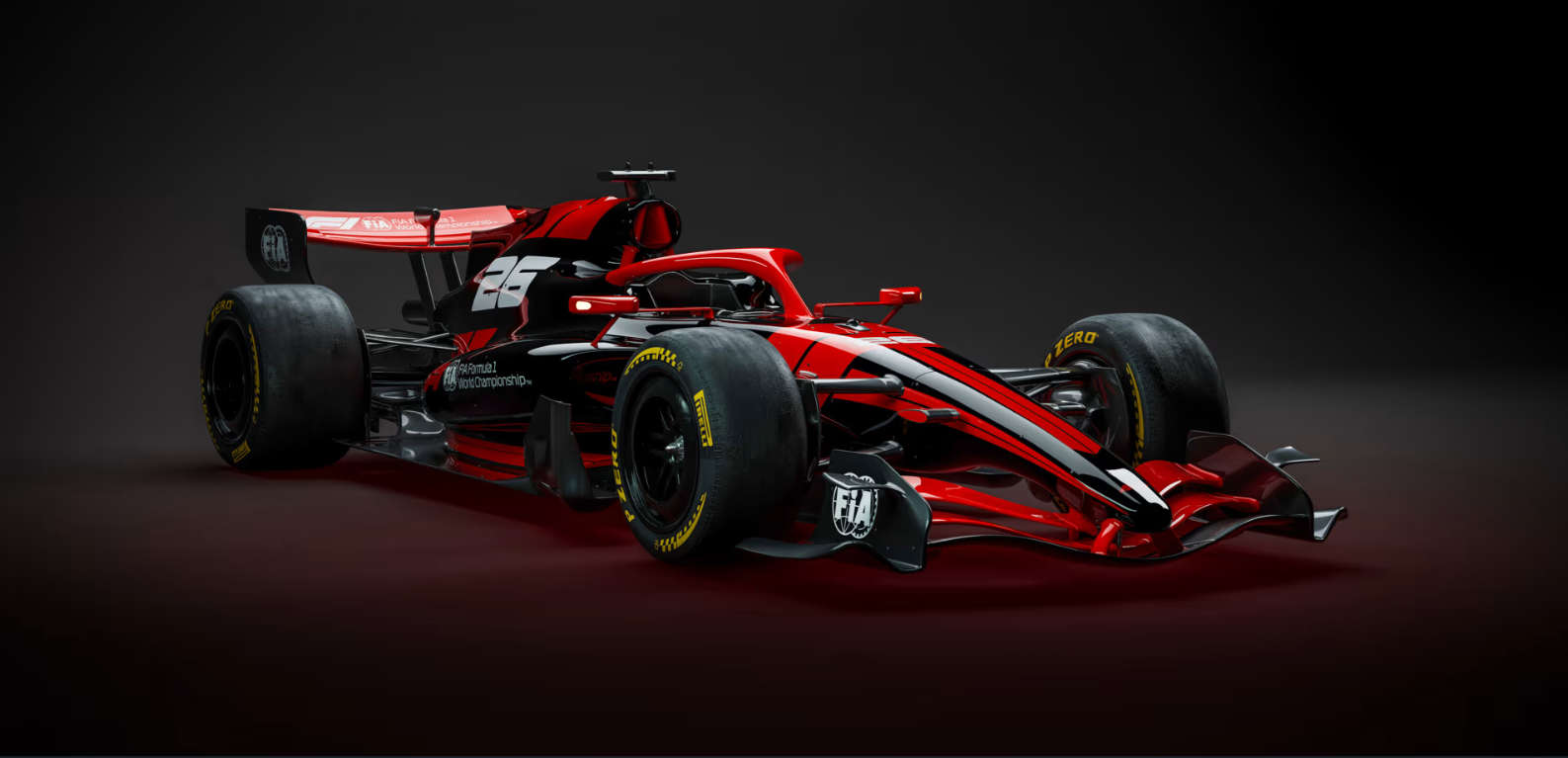
The 2026 season is bringing a complete transformation to Formula 1. Broadcasting legend Martin Brundle has called it "the biggest changes ever" in the sport's history. This isn't just a minor tweak — the engines, wings, car dimensions, fuel, and even the way drivers race are all being rewritten from scratch.
Put simply, F1 from 2025 and F1 in 2026 are practically different sports.
In this article, we'll break down exactly what's changing in 2026 — explained simply enough for anyone new to F1 to follow along.
1. Engine — Half the Power is Electric
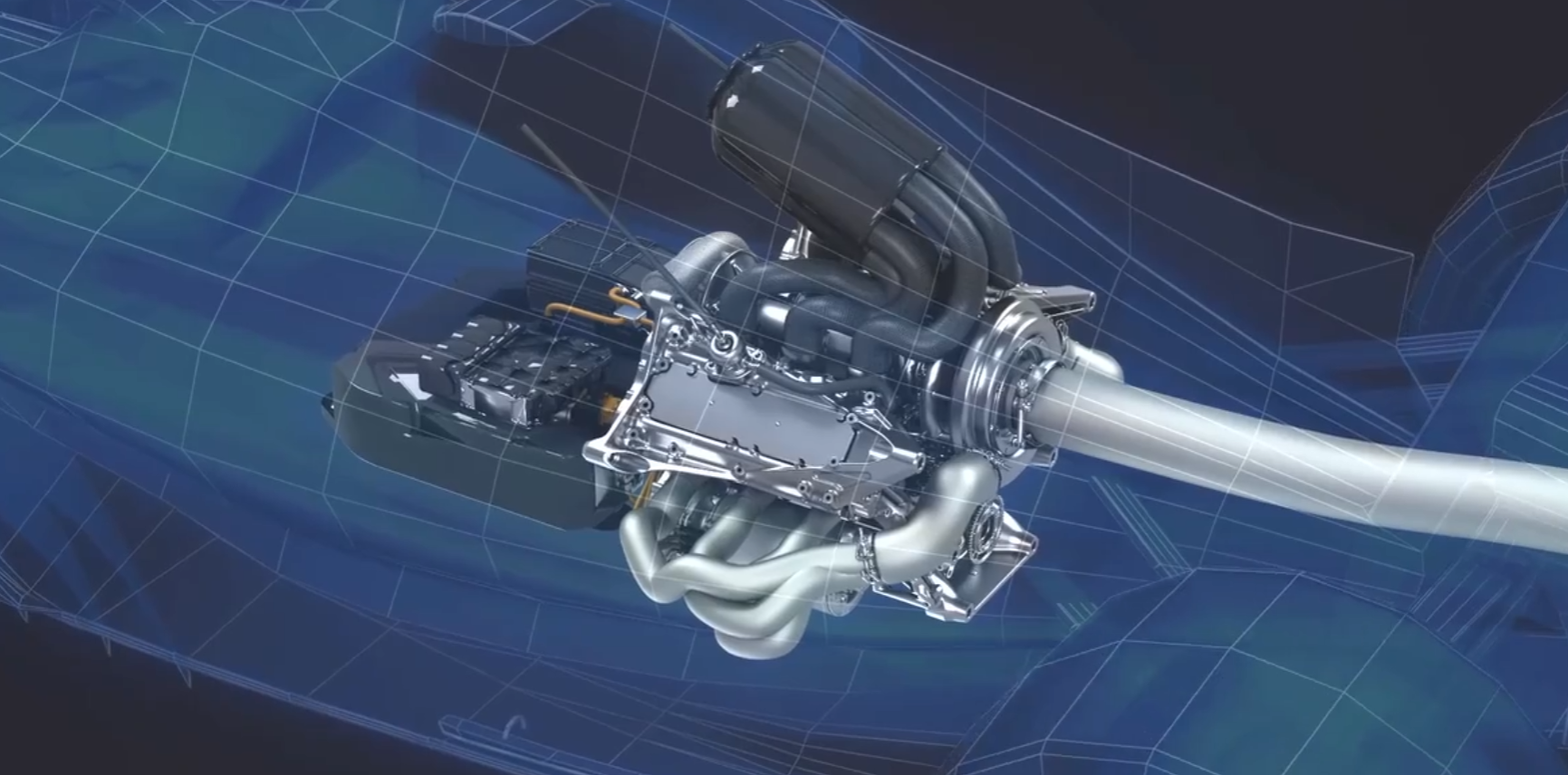
Let's start with the heart of the F1 machine: the engine. F1 has used a 1.6-litre V6 turbo hybrid engine since 2014, and that basic framework remains. But everything inside it has been completely reworked.
The biggest change is that the electric motor's output has roughly tripled. To put it simply, if the current F1 engine was "80% petrol : 20% electric," from 2026 it becomes "50% petrol : 50% electric." It's like going from a hybrid car to something much closer to a full electric vehicle.
The MGU-H is also being removed. "What's that?" you might ask — it's an incredibly complex device that generates electricity from exhaust heat. It was so difficult to build that it became a major barrier preventing new engine manufacturers from entering F1. Removing it has opened the door for newcomers like Audi and Ford to join the sport.
Total power output? Still over 1,000 horsepower. The power stays the same — it's how that power is generated that's changed.
The interesting part is that when you use and when you save electric energy will determine race results. Just like a smartphone battery — if you use it recklessly, you'll run out of power before the finish line. A driver's "energy management ability" becomes a brand new performance metric.
2. The Wings Move — The End of DRS
If you've watched F1, you've probably heard commentators shout "DRS is open!" DRS was a system that let a trailing car open its rear wing to reduce drag and increase speed for overtaking, but only when within one second of the car ahead. It's been the cornerstone of F1 overtaking since 2011.
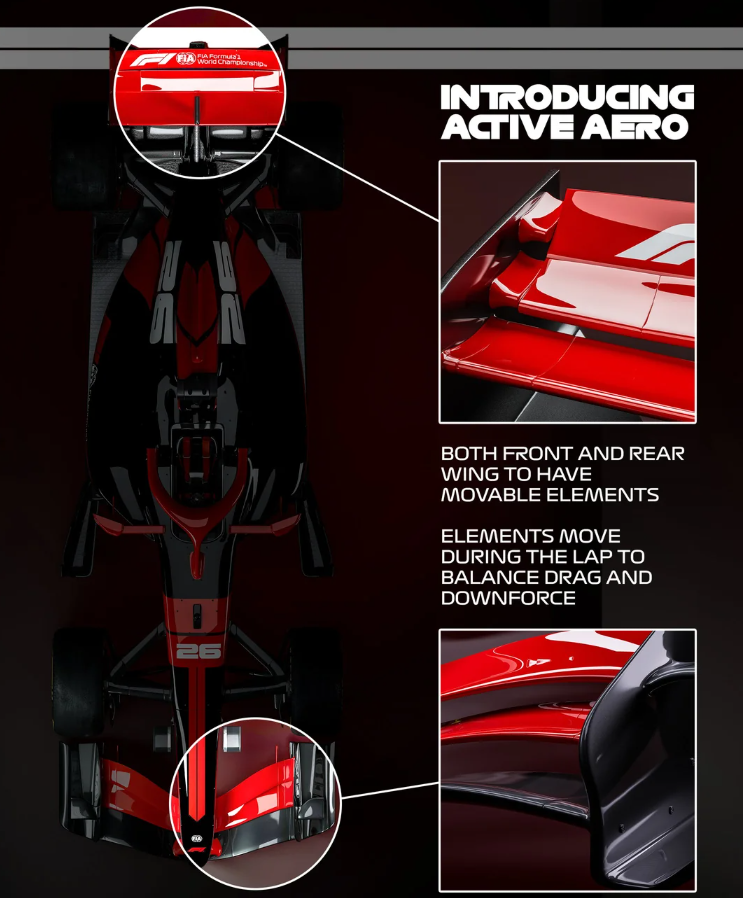
From 2026, DRS is gone. In its place comes a far more advanced system: Active Aero.
This is technology that allows the car's wings to change shape depending on the situation. In corners, the wings close (Corner Mode) to maximize the downforce pressing the car into the track. On straights, the wings open up (Straight Mode) to reduce air resistance and boost top speed.
Imagine a bird folding and spreading its wings — that's essentially what it looks like.
The biggest difference from DRS is that every driver can use it on every lap. DRS required you to be within one second of the car ahead, but Active Aero has no such restriction.
"So how do you overtake?" Great question. Two new modes come into play:
Overtake Mode: When you get within one second of the car ahead, extra electric power is activated for the next lap. Think of it like "picking up a power-up" in a video game. You can use it all at once or split it across multiple sections.
Boost Mode: Unlike Overtake Mode, this isn't restricted to specific zones. Drivers can hit a button to unleash maximum engine and battery power at any point on track. It's similar to a nitro button in a racing game, but you need to keep an eye on your battery level.
3. Smaller and Lighter Cars
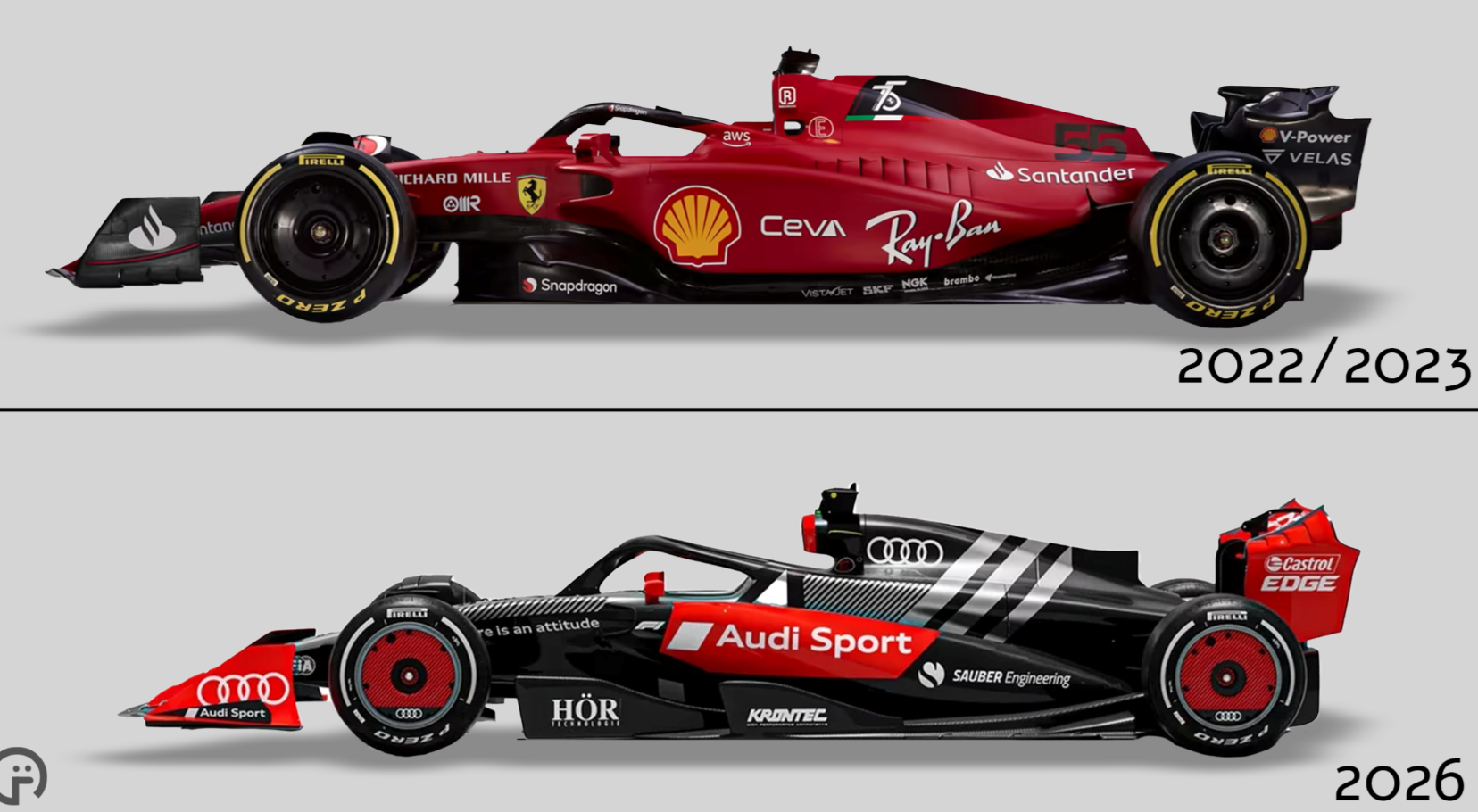
Let's be honest — F1 cars in recent years have been massive. Over 5 meters long and nearly 800kg heavy. Even drivers complained they felt like "driving a boat." On narrow street circuits, there was barely room to overtake.
The 2026 regulations tackle this problem head-on.
What's changing?
The wheelbase has been reduced by 200mm. That's 20cm — roughly the length of a drinks bottle. The car width is 100mm narrower (about the length of a chocolate bar), and the floor has been trimmed too. Minimum weight drops by 30kg to 768kg — roughly the weight of one adult male lighter.
George Russell, after his first run in the new car at the Barcelona Shakedown, said: "You can feel it being smaller. The weight reduction compared to previous years is definitely noticeable."
The aerodynamic structure has also changed significantly. The Venturi tunnel floors used since 2022 (which sucked air underneath the car to generate downforce) are gone, replaced by a simpler flat floor with a larger diffuser. The complex front wings have been simplified, and the beam wing underneath the rear wing has been deleted.
Why all these changes? The main reason is to reduce the dirty air (turbulence) affecting the following car. When the air behind the lead car is disrupted, the chasing car loses grip in corners, making overtaking difficult. A simpler aerodynamic design is expected to ease this problem.
4. New Fuel — The End of Fossil Fuels
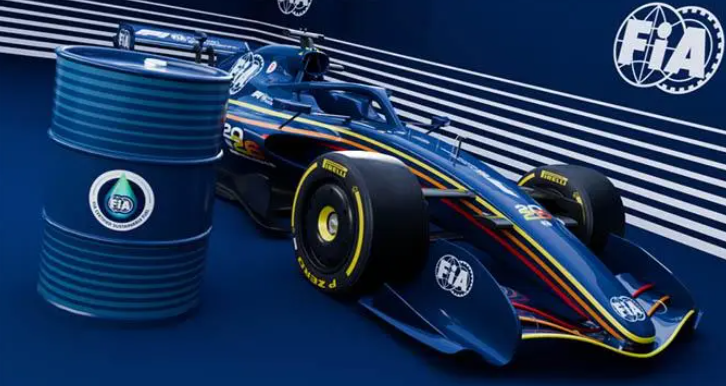
From 2026, F1 cars will run on 100% sustainable fuel. Previously, they used fossil fuel with just 10% bioethanol mixed in. Now, the fuel is completely different.
"What is sustainable fuel?" — Simply put, it's fuel made from waste or carbon captured from the air. It's produced from sources like carbon capture technology, municipal waste, and non-food biomass (tree bark, agricultural byproducts, etc.). Since the carbon released when burning equals the carbon absorbed during production, it's effectively carbon neutral.
This is a key part of F1's goal to achieve "net-zero carbon by 2030," and it was already trialed in F2 and F3 during the 2025 season. The impact on performance is said to be minimal.
5. Major Shake-Up Among Engine Manufacturers
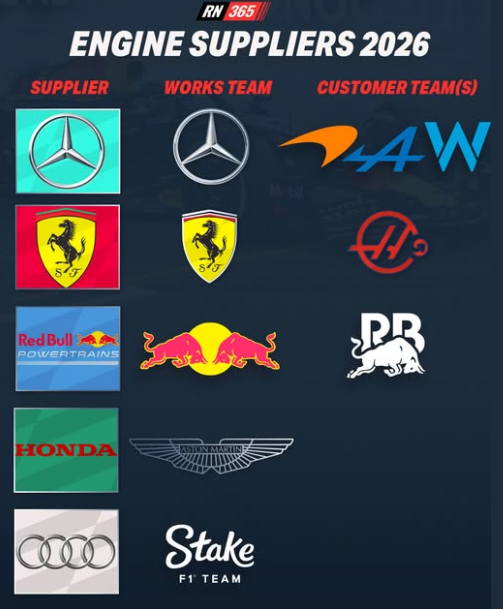
In F1, teams either build their own engines (power units) or receive them from manufacturers. In 2026, the entire landscape is being reshuffled.
Ferrari engine: Supplying Ferrari, Haas, and Cadillac (new team)
Mercedes engine: Supplying Mercedes, McLaren, and Alpine
Honda engine: Exclusive supply to Aston Martin only. Honda, which previously supplied Red Bull, has split and becomes Aston Martin's new partner.
Red Bull Ford Powertrains: Supplying Red Bull and Racing Bulls. Red Bull has partnered with Ford to build its own engine for the first time in history. In football terms, it's like a former-player-turned-owner building their own youth academy from scratch.
Audi: Supplying the Audi team (formerly Sauber). This is Audi's first-ever entry into F1.
Renault: Ceasing engine supply. For the first time since 2000, there will be no Renault engines in F1. Alpine switches to Mercedes power.
A record six engine manufacturers competing simultaneously — an extremely rare occurrence.

6. A New Team Joins — Cadillac F1
For the first time in 10 years since Haas joined in 2016, a new team enters F1. It's American brand Cadillac (GM). Originally pursuing entry alongside Andretti Global, Cadillac ultimately entered under its own brand.
They'll use Ferrari engines, with Sergio Pérez (departing from Red Bull) and Valtteri Bottas (who spent a year as a reserve driver) confirmed as drivers.
From 2029, GM plans to use its own self-developed engine, making this a long-term project rather than a simple entry.
This brings the 2026 grid to 11 teams and 22 cars.

7. The Budget Cap Goes Up
F1 has had a cost cap since 2021. It's a mechanism to prevent wealthy teams from buying their way to victory — simply put, "you cannot spend more than this amount."
The cap through 2025 was $135 million, but for 2026 it's been raised significantly to $215 million.
Why the increase? Because everything needs to be built from a blank sheet. New engine, new chassis, new aerodynamics, new fuel — developing everything from scratch costs more money.
The power unit manufacturer cost cap has also risen from $95 million to $130 million.
8. Safety Gets Stronger
Behind every flashy technical change, there's always safety. F1 is a sport where cars exceed 350 km/h, so every time regulations change, safety standards rise alongside them.
The testing standards for the Survival Cell — the carbon fiber structure surrounding the driver — have been strengthened. Think of it as the driver's "armor" that protects them in a crash.
The roll hoop (the protection above the driver's head) can now withstand 23% more load. That's equivalent to supporting the weight of about nine family cars. Even if the car flips, the driver's head stays protected.
The front impact structure now features a two-stage nose design. Instead of the nose breaking off entirely in a crash, it absorbs impact in stages — similar to how airbags deploy progressively.
Side protection has also been enhanced, with cockpit and fuel tank protection more than doubling in thickness.
And with electric output tripling, high-voltage components (MGU-K, battery) must now be housed inside the survival cell. This prevents marshals and other drivers from being exposed to high voltage in the event of a crash.
Barcelona Shakedown — The Drivers' First Reactions
All these changes came together when the new machines hit the track in Barcelona in late January. Ten of eleven teams participated (Williams excepted), and reliability was remarkably strong.
For comparison, during the last major regulation change in 2014, all teams combined managed just 93 laps on the first day. This time? Mercedes alone completed 500 laps across three days.
Driver reactions were overwhelmingly positive.
Defending champion Lando Norris said the new cars are "good fun — more power and less grip, which actually makes it more enjoyable." The thrill of controlling a sliding car is back.
Seven-time world champion Lewis Hamilton commented: "We have a lot less downforce, but the car is a little bit more fun to drive — it's oversteery, snappy, but easier to catch. Definitely more enjoyable than the previous generation."
George Russell was struck by the straight-line speed: "The amount of power the new power units give is pretty impressive. It's probably the quickest I've ever seen an F1 car pass here in Barcelona."
The Bottom Line — Why 2026 Matters
The 2026 regulation changes can be summed up in one sentence:
"Faster, more electric, and more strategic F1."
Drivers can no longer just drive fast. When to deploy energy, when to recharge, when to hit the boost — dozens of decisions every single lap. Like managing your smartphone battery all day long, drivers must balance their energy throughout the entire race. One small mistake is immediately reflected in lap times.
With new engine manufacturers entering, Cadillac joining the grid, and wholesale partnership reshuffling, the 2026 season is one where nobody knows which team will come out on top. Just as Mercedes began their dominant run with the new regulations in 2014, someone will find the answers first amid this chaos.
The new era begins at the Australian Grand Prix in March.
No comments yet. Be the first!